Reliability problems in harnesses and connectors are rarely a clean open circuit; contact resistance drifts gradually and eventually turns into an intermittent fault. Failures of this kind are easily missed under laboratory conditions and need targeted test methods.
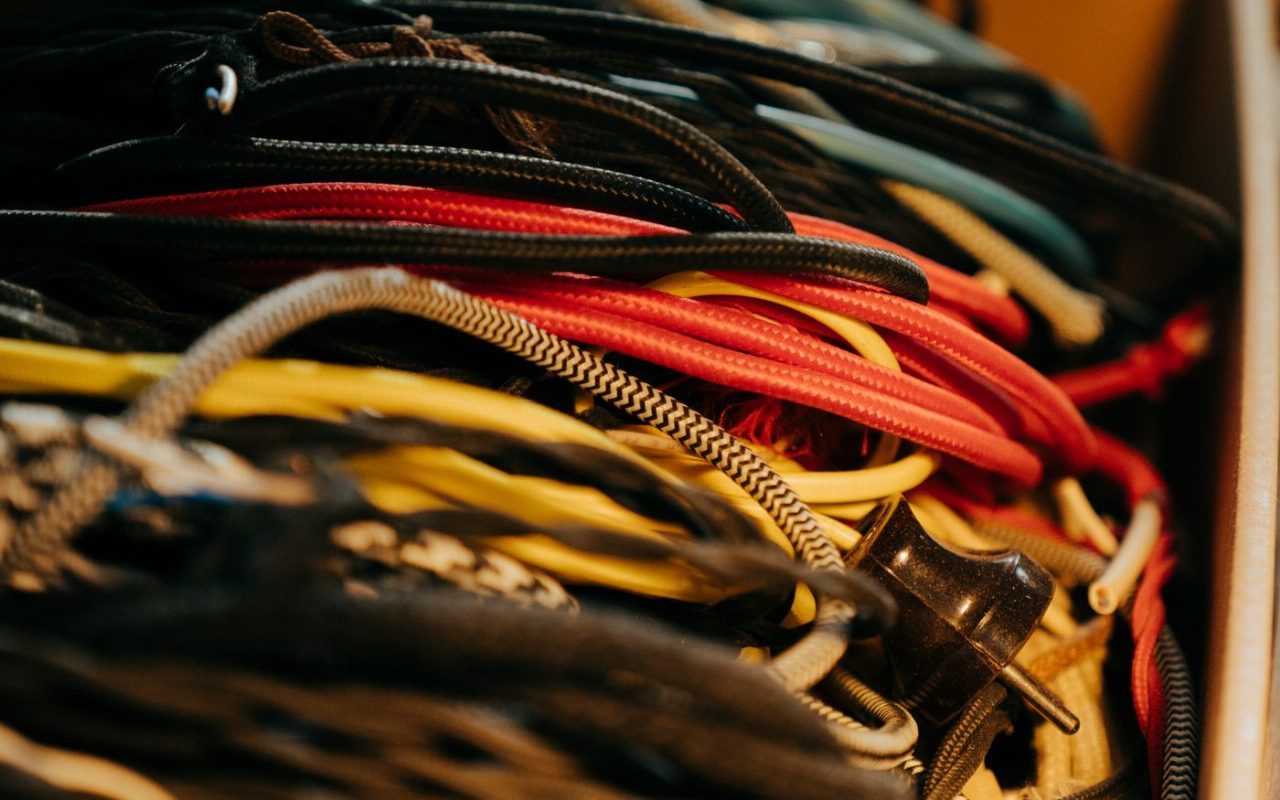
Typical products
- Low-voltage harness assemblies
- High-voltage harnesses
- Connectors and terminals
- Crimped terminal leads
- FPC ribbon cables
- Automotive Ethernet harnesses
Test list
- Mechanical: random vibration, mechanical shock, insertion and extraction force, terminal pull-out force, locking force.
- Electrical: contact resistance (initial value plus the change after test), insulation resistance, dielectric withstand, transient immunity.
- Environmental: high and low temperature, temperature cycling, steady-state damp heat, cyclic salt mist, ingress protection.
- Key point: contact resistance must be measured as a change. A continuity check alone misses fretting-wear failures.
Common failure modes
- Fretting wear: small relative motion at the contact interface under vibration repeatedly breaks the oxide film, so contact resistance keeps climbing.
- Stress relaxation: terminals lose spring force after long-term compression, leaving contact pressure short of the requirement.
- Terminal loosening: the locking feature fails under vibration and shock.
- Water ingress corrosion: contact surfaces corrode once the seal fails.
- Insulation degradation: insulation resistance drops and tracking can occur in hot-humid environments.
Test design points
- In-situ monitoring during vibration (four-wire contact resistance, counting intermittent opens) exposes progressive failures better than a single measurement afterwards.
- Contact resistance must be measured across the complete loop of connector, terminal and wire; otherwise the crimp interface is not covered.
- Agree the functional monitoring items for the test, such as communication signal integrity.
Service notes
Our laboratory holds both CMA and CNAS accreditation, covers about 10,000 m2 and runs more than 500 sets of equipment. All testing is carried out in our own laboratories — nothing is subcontracted. Plant visits and on-site witnessed testing are welcome.
Scheduling follows the actual project pipeline. You can state your preferred lead time when you submit samples; we will confirm a feasible plan against current capacity and keep you updated at each milestone.