CISPR 25 specifies the electromagnetic emission limits and immunity test conditions for vehicle components; GB 18655 is China's identical adoption. It is the core basis for automotive EMC testing.
Standard positioning
These two standards address the problem of onboard electrical equipment interfering with itself. They specify limits — what may not be exceeded — and test conditions, meaning how to measure, and the pass line is explicit, unlike environmental reliability standards where the customer has to agree the criteria.
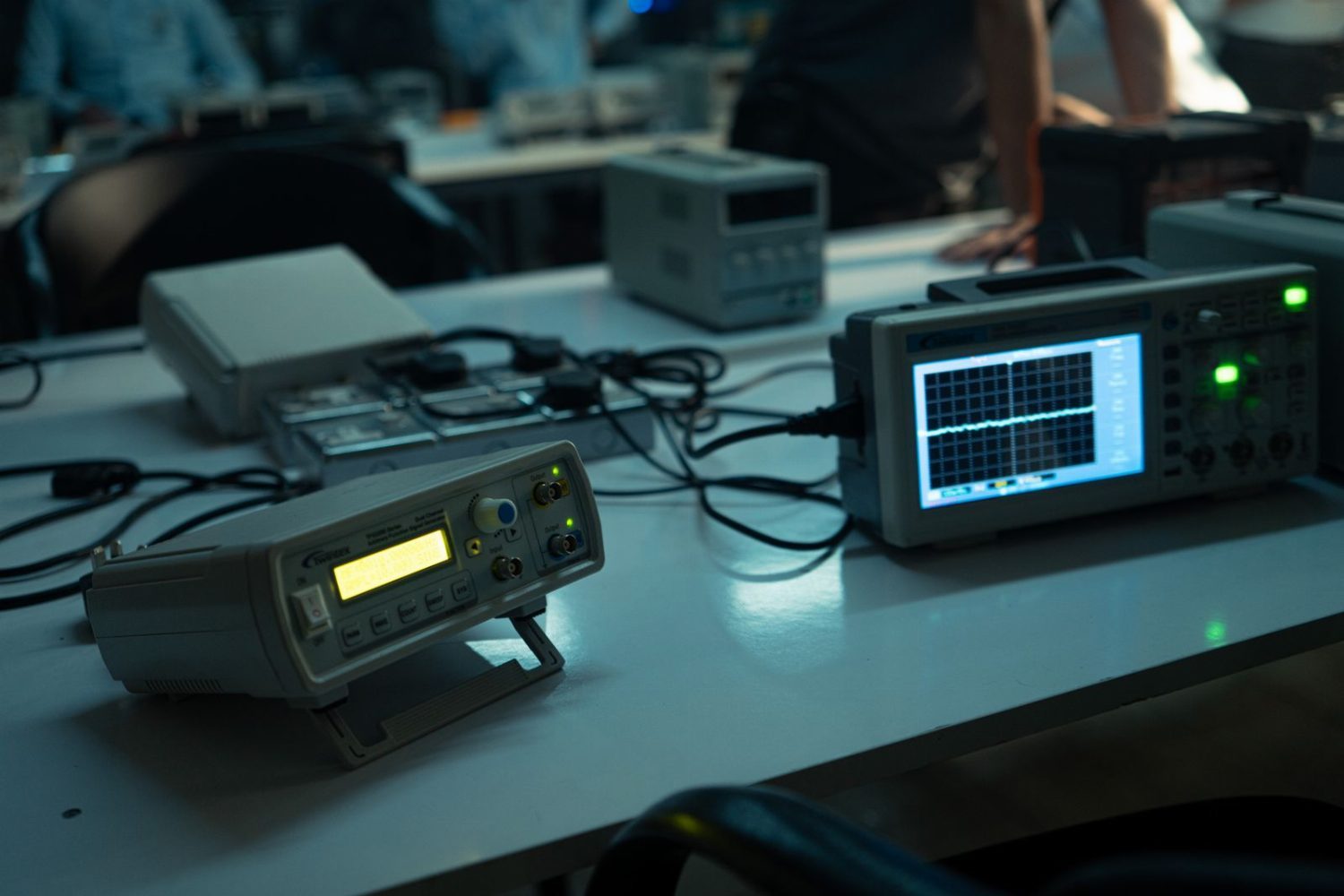 CISPR 25 / GB 18655 applications" loading="lazy">
Scope
- Applies to: electrical and electronic equipment and components in 12 V and 24 V systems.
- Items covered: conducted emission, radiated emission, radiated immunity, ESD immunity and transient pulse immunity.
- Relation to GB 18655: technically identical; GB 18655 covers vehicles, boats and internal combustion engines, so its scope is slightly wider.
Structure and content
Emission tests
- Conducted emission (CE): the interference voltage is measured on supply and signal lines using a LISN, with limits graded by frequency band.
- Radiated emission (RE): the field strength radiated by the product is measured in an anechoic chamber, with limits graded by frequency band and measurement distance.
Immunity tests
- ESD: contact and air discharge, applied at defined severity levels.
- Radiated immunity (RI): field strength is applied in the chamber while functional behaviour is monitored.
- Conducted immunity (CI): interference pulses applied by BCI or direct injection.
- Transient pulses: simulating transient events in the vehicle electrical system.
Test set-up requirements
- Chamber type (semi-anechoic or fully anechoic), absorber performance, ground plane and turntable are all specified.
- The sample is assembled as it would be in the vehicle, including harness and enclosure.
- Operating modes must cover typical conditions, with functions monitored throughout.
Acceptance
- Limits: the project passes when every measured value is below the limit for the corresponding band.
- Immunity: assessed against performance criteria A/B/C/D; criterion D — permanent failure — is a fail.
- This is one of the few testing standards with explicit limits, so disputes are relatively rare.
Common non-conformities
- Radiated emission: clock harmonics over the limit, poor shielding, radiation from the harness.
- Conducted emission: insufficient filtering in the switching supply, an unreasonable return path.
- ESD immunity: missing interface protection, an over-sensitive reset circuit.
- Radiated immunity: MCU lock-up, communication drop-out, ADC drift.
- Measurement deviation caused by an incomplete product state — commonly a shield can left uninstalled.
Relationship to other standards
With ECE R10
R10 is the whole-vehicle type approval requirement; CISPR 25 is used for component verification and R10 for vehicle approval.
With ISO 11452
ISO 11452 addresses EMC measurement on whole vehicles and large assemblies; CISPR 25 addresses components.
With OEM standards
OEM standards usually tighten this one, for example by requiring margin below the limit or longer test durations.
Service notes
The laboratory holds both CMA and CNAS accreditations, with approximately 10,000 m² of space and 500+ instruments. All testing is completed in our own laboratories — no subcontracting. On-site visits and witnessed testing are supported.
Testing is scheduled per project. When submitting samples, tell us your expected timeline; we will confirm a feasible plan against current availability and keep you updated at each milestone.